Name
Serbia takes its name from the Serb people, but the origin of their name is unclear. It may derive from the Caucasian root word "ser", meaning "man".
Source: CIA World Factbook · 2026-02-01 · text generated from this source, approved by a person
Climate
In the north, a continental climate brings cold winters and hot, humid summers with well-distributed rainfall. Other parts have a continental and Mediterranean climate: relatively cold winters with heavy snowfall, and hot, dry summers and autumns.
Source: CIA World Factbook · 2026-02-01 · text generated from this source, approved by a person
People and society
The population includes Serb, Hungarian, Romani, and Bosniak groups, as well as others and people whose ethnicity is undeclared or unknown. Serbian is the official language, alongside Hungarian, Bosnian, Romani, other languages, and languages that are undeclared or unknown.
Religious identification includes Serbian Orthodox, Islam, Catholic, atheist, other Christians, Protestant, agnostic, unknown, and no response. Population is distributed fairly evenly through most of the country, while urban areas attract larger and denser populations.
Source: CIA World Factbook · 2026-02-01 · text generated from this source, approved by a person
Flag and symbols
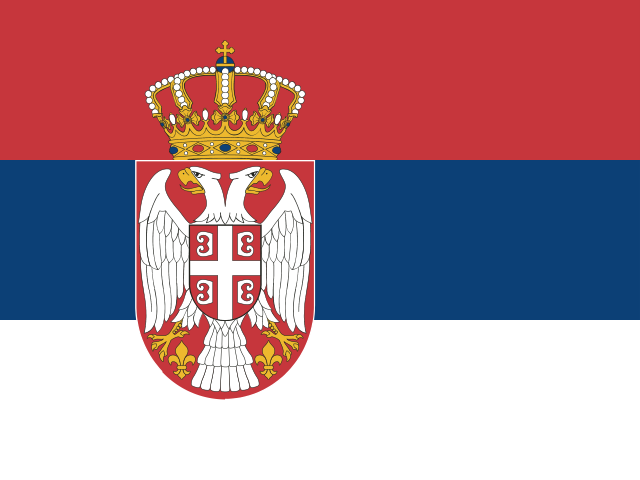
Red, blue, and white horizontal stripes form the flag; its coat of arms is shifted left. The arms show a white double-headed eagle on a red shield, a smaller red shield quartered by a white cross, and a royal crown. Colors represent freedom and revolutionary ideals; the eagle on a red shield represents the government, and the smaller shield represents the country. The white double-headed eagle is the national symbol.
Source: CIA World Factbook · 2026-02-01 · text generated from this source, approved by a person
 Serbia