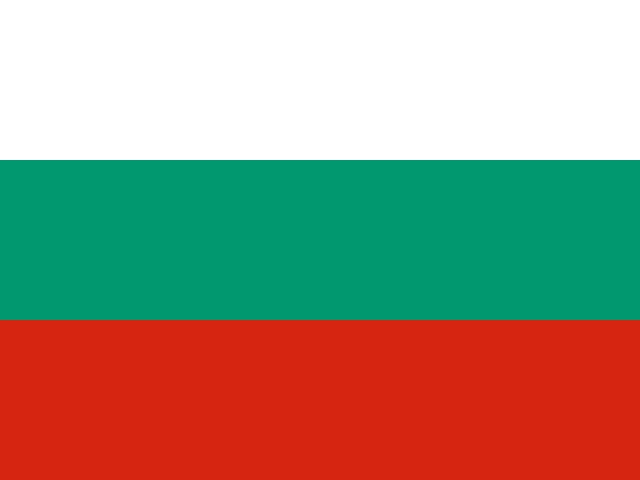
 Bulgaria
Background
A Central Asian Turkic tribe, the Bulgars merged with local Slavic inhabitants in the late 7th century to form the first Bulgarian state. In succeeding centuries, Bulgaria struggled with the Byzantine Empire to assert its place in the Balkans. By the end of the 14th century, the Ottoman Turks overran the country. Northern Bulgaria attained autonomy in 1878, and all of Bulgaria became independent from the Ottoman Empire in 1908.
Having fought on the losing side in both World Wars, Bulgaria fell within the Soviet sphere of influence and became a People's Republic in 1946. Communist domination ended in 1990, when Bulgaria held its first multiparty election since World War II. The country then began the contentious process of moving toward political democracy and a market economy while combating inflation, unemployment, corruption, and crime. It joined NATO in 2004, the EU in 2007, and the Schengen Area for air and sea travel in 2024.
Source: CIA World Factbook · 2026-02-01 · text generated from this source, approved by a person