Name
The name South Sudan describes the country's geographic position within Sudan before independence. The name Sudan derives from the Arabic "balad-as-sudan", meaning "Land of the Black [peoples]".
Source: CIA World Factbook · 2026-02-01 · text generated from this source, approved by a person
People and society
Dinka (Jieng), Nuer (Naath), Shilluk (Chollo), Azande, Bari, Kakwa, Kuku, Murle, Mandari, and Didinga form part of South Sudan's ethnic mosaic. Other ethnic groups include Ndogo, Bviri, Lndi, Anuak, Bongo, Lango, Dungotona, Acholi, Baka, and Fertit. English is official; Arabic includes Juba and Sudanese variants, while ethnic languages include Dinka, Nuer, Bari, Zande, and Shilluk.
Christians, followers of folk religion, Muslims, and others, including unaffiliated people, make up South Sudan's religious communities. People cluster in urban areas, particularly in the western interior and around the White Nile.
Source: CIA World Factbook · 2026-02-01 · text generated from this source, approved by a person
Flag and symbols
Three equal horizontal bands—black, red edged in white, and green—form the flag, with a blue isosceles triangle based on the left side. A five-pointed gold star in the triangle's center represents the unity of the country's states. Black stands for the people; red, the blood shed in the struggle for freedom; green, the land; and blue, the Nile. The African fish eagle is South Sudan's national symbol.
Source: CIA World Factbook · 2026-02-01 · text generated from this source, approved by a person
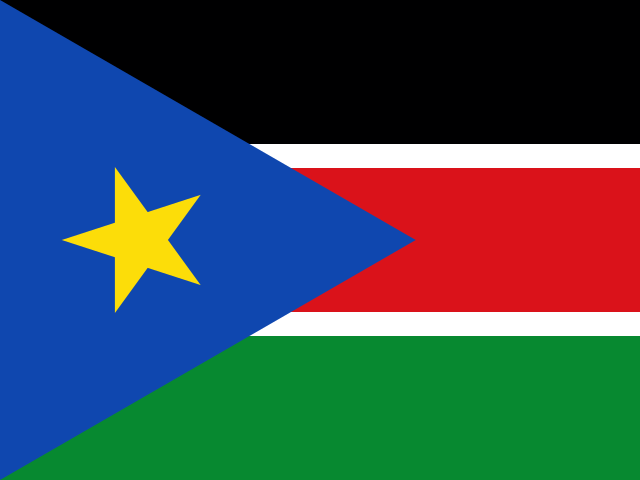 South Sudan