Name
The name comes from the Congo River, most of which lies within the Democratic Republic of the Congo. The river’s name derives from "Kongo," a Bantu kingdom in the area.
Source: CIA World Factbook · 2026-02-01 · text generated from this source, approved by a person
Climate
Across the equatorial river basin, the tropical climate is hot and humid, while southern highlands are cooler and drier and eastern highlands cooler and wetter. North of the Equator, the wet season runs from April to October, while the dry season runs from December to February. South of the Equator, the wet season runs from November to March, while the dry season runs from April to October.
Source: CIA World Factbook · 2026-02-01 · text generated from this source, approved by a person
People and society
Its people include African ethnic groups, with a Bantu majority; Mongo, Luba, Kongo, and Mangbetu-Azande are among them. Mongo, Luba, and Kongo are Bantu groups, while Mangbetu-Azande is identified as Hamitic. French is official, while Lingala serves as a trade language; Kingwana is a Kiswahili or Swahili dialect. Kikongo and Tshiluba are also spoken.
Christian communities include Roman Catholic, Protestant, and other Christian traditions; Kimbanguist and Muslim communities, syncretic sects, and indigenous beliefs are also present. Urban clusters spread throughout the country, particularly in the northeast along borders with Uganda, Rwanda, and Burundi. The capital, Kinshasha, is the largest city, located in the west along the Congo River. The south is least densely populated.
Source: CIA World Factbook · 2026-02-01 · text generated from this source, approved by a person
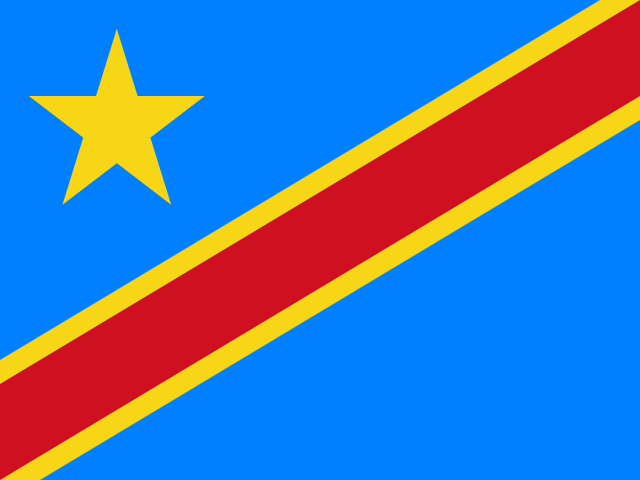 Democratic Republic of the Congo