57 cities

Location of FranceColombiaSpainArgentinaCayman IslandsSint MaartenBritish Virgin IslandsEquatorial GuineaGreenlandSaint Kitts and NevisTurks and Caicos IslandsIsraelDemocratic Republic of the CongoItalyMaltaBermudaGuernseyÅlandSri LankaBarbadoseSwatiniBahrainVaticanSaint BarthélemyNorth MacedoniaChileSouth SudanGreeceSwedenCentral African RepublicGermanySaint Pierre and MiquelonDominican RepublicBosnia and HerzegovinaSaint Vincent and the GrenadinesAntigua and BarbudaFaroe IslandsWestern SaharaCuraçaoUnited States Virgin IslandsJordanUnited KingdomPuerto RicoKosovoArubaPeruAnguillaKuwaitTrinidad and TobagoNorwayPakistanFinlandKenyaSierra LeoneParaguayIsle of ManPanamaUruguayGabonTogoMoldovaUgandaSudanAngolaYemenMaldivesNepalBurkina FasoMaliSenegalLibyaGuyanaBeninJerseyHaitiHondurasAndorraIndiaVenezuelaSaint LuciaChinaSan MarinoCanadaMonacoKazakhstanBurundiLesothoMauritiusCabo VerdeJamaicaGrenadaQatarEgyptNorthern CyprusSeychellesNigeriaSaint HelenaEthiopiaTürkiyeIranSouth AfricaIcelandUnited Arab EmiratesBelarusCyprusTajikistanMontenegroAustriaLuxembourgSwitzerlandBulgariaKyrgyzstanDominicaEritreaTurkmenistanDenmarkCongoComorosOmanLiberiaBotswanaNetherlandsSomalilandLatviaLithuaniaMalawiMexicoBrazilSomaliaRwandaAlbaniaSaint MartinMontserratSlovakiaCroatiaArmeniaDjiboutiSloveniaGambiaGuinea-BissauEstoniaSaudi ArabiaBelgiumPortugalTanzaniaUkraineAlgeriaIraqAfghanistanPolandMoroccoUzbekistanLiechtensteinGhanaMozambiqueMadagascarCameroonCôte d'IvoireNigerRomaniaSão Tomé and PrincipeZambiaEcuadorSyriaChadZimbabweGuineaTunisiaBoliviaCubaIrelandMauritaniaNamibiaSurinameBahamasCzechiaAzerbaijanHungarySerbiaLebanonNicaraguaCosta RicaPalestineGeorgiaUnited States of AmericaRussiaNew ZealandFranceParisMarseilleStrasbourgNantesRouenLyonLilleNiceToulouseBordeaux
CountryTranscontinental

France

46.70° N, 2.55° E

Population of 67,059,887 — the 21st highest of 235 countries.

population 67,059,887 · 21st/235
Natural Earth · ranks computed across the countries in this atlas that carry the value

Population
67,059,887
Area
≈ 636,064 km²
Population density
≈ 105 / km²
Capital
Paris
Natural Earth
ISO codes
FR · FRA
GDP (nominal)
$3.16 trillion
GDP per capita (PPP)
$54,500
How big, reallyDrawn at the same scale as Thailand. Equal-area projection, not the map you are used to.
France ≈ 636,062 km²Thailand 513,120 km²

geometry: Natural Earth 1:50m · EPSG:6933 equal-area

Where France sits in the world

Each line is every country in this atlas that carries the value, ordered smallest to largest. The line down the middle is the world median; the mark on each line is this country.

  1. Median age42.7 years42nd of 224 · median 32.6 years
  2. Life expectancy82.6 years25th of 224 · median 76.2 years
  3. Fertility rate1.9 children per woman114th of 225 · median 1.92 children per woman
  4. Population67,059,88721st of 235 · median 5,454,073
  5. Coastline4,853 km29th of 229 · median 402 km

Overview

Name

France's name derives from Latin "Francia", meaning "Land of the Franks." The Franks were Germanic tribes along the Rhine River in the 3rd century CE; their name may come from Old German "franka", meaning "brave," or the personal names Francio and Francus.

Source: CIA World Factbook · 2026-02-01 · text generated from this source, approved by a person

Climate

Metropolitan France has generally cool winters and mild summers, while the Mediterranean area has mild winters and hot summers. Occasional strong, cold, dry winds from the north to northwest are known as the mistral.

Source: CIA World Factbook · 2026-02-01 · text generated from this source, approved by a person

People and society

The population includes Celtic and Latin people, alongside Teutonic, Slavic, North African (Algerian, Moroccan, Tunisian), Indochinese, and Basque minorities. French is the official language; declining regional dialects and languages include Provençal, Breton, Alsatian, Corsican, Catalan, Basque, Flemish, Occitan, and Picard.

Roman Catholic, Muslim, Protestant, Buddhist, Orthodox, and Jewish communities are present, alongside people reporting no religion. People cluster in the north and southeast, while urban agglomerations extend throughout the country; Paris is by far the largest city, with Lyon a distant second.

Source: CIA World Factbook · 2026-02-01 · text generated from this source, approved by a person

Government

Its government is a semi-presidential republic. The legal system is civil law, with review of administrative but not legislative acts. The latest constitution took effect 4 October 1958, following many previous constitutions. No official independence date exists: 486 (Frankish tribes unified under Merovingian kingship) and 10 August 843 (Western Francia established from the division of the Carolingian Empire). Other listed dates include 14 July 1789 (French monarchy overthrown) and 22 September 1792 (First French Republic established). On 4 October 1958, the Fifth French Republic was established. Fête de la Fédération is the national holiday, on 14 July (1790).

Source: CIA World Factbook · 2026-02-01 · text generated from this source, approved by a person

Flag and symbols

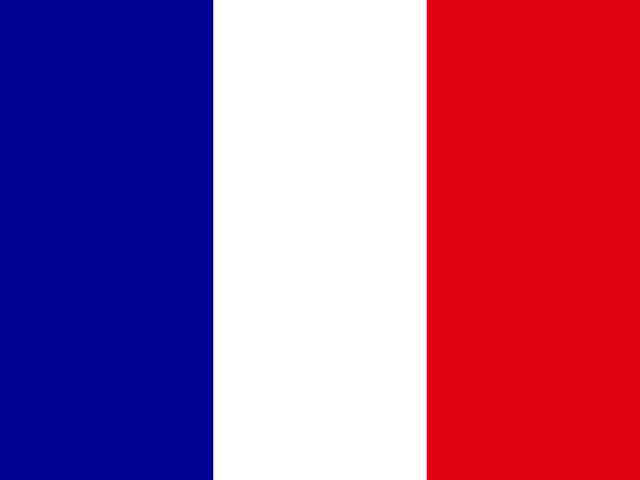
Three equal vertical bands of blue on the left, white, and red form the flag. Known as the le tricolore (tricolor), the flag dates to 1790 and the French Revolution, when the traditional color of white was combined with the blue and red of the Paris militia; its colors were initially ordered red, white, and blue. National symbols include the Gallic rooster, fleur-de-lis, and Marianne, the female personification of the country.

Source: CIA World Factbook · 2026-02-01 · text generated from this source, approved by a person
Key figures

CIA World Factbook

Economy

GDP (nominal)
$3.16 trillion
GDP (PPP)
$3.73 trillion
GDP per capita (PPP)
$54,500
GDP growth
+1.2%
Inflation (consumer prices)
2%
Unemployment
7.4%
Exports
$1.07 trillion
Imports
$1.07 trillion

People

Life expectancy
82.6 years
Median age
42.7 years
Birth rate
10.88 per 1,000
Death rate
9.91 per 1,000
Fertility rate
1.9 children per woman
Population growth
+0.2% a year
Urban population
81.8%
Languages
  • Frenchofficial100%
  • declining regional dialects and languages
Religions
  • Roman Catholic47%
  • Muslim4%
  • Protestant2%
  • Buddhist2%
  • Orthodox1%
  • Jewish1%
  • other9%

Land

Coastline
4,853 km
Land borders
3,956 km
Mean elevation
375 m

Values from the CIA World Factbook archive. Each carries the year it describes; open a year for the exact source field.

Connections

Natural geography 27

Natural Earth outlines · features with a Wikidata ID

Geographic regions 2

Largest cities 57

Population · Natural Earth

  1. Pariscapital9.9M
  2. Lyon1.4M
  3. Marseille1.4M
  4. Lille1M
  5. Nice927K
  6. Toulouse847K
  7. Bordeaux803K
  8. Rouen532.6K
  9. Strasbourg440K
  10. Nantes438.5K
  11. Metz409.2K
  12. Grenoble388.6K

Sources