Overview
Name
The word "man" may be derived from the Gaelic word for "mountain." The local name comes from "ellan," meaning "island," and Vannin, a form of the name Mannan.
Source: CIA World Factbook · 2026-02-01 · text generated from this source, approved by a person
Background
Part of the Norwegian Kingdom of the Hebrides until the 13th century, the Isle of Man was ceded to Scotland. It came under English lordship in the 14th century before the British Government purchased it in 1765.
The Isle of Man is a British Crown dependency, a self-governing possession of the British Crown that is not part of the UK. The UK Government remains constitutionally responsible for its defense and international representation. Current concerns include reviving the almost extinct Manx Gaelic language.
Source: CIA World Factbook · 2026-02-01 · text generated from this source, approved by a person
Government
A parliamentary democracy (Tynwald) is the form of government. UK laws apply, as well as Manx statutes. The development of the Isle of Man constitution dates to at least the 14th century. The Isle of Man has no independence and is a British Crown dependency. The national holiday is Tynwald Day, 5 July, first recorded in 1417.
Source: CIA World Factbook · 2026-02-01 · text generated from this source, approved by a person
Natural geography 2
Natural Earth outlines · features with a Wikidata ID
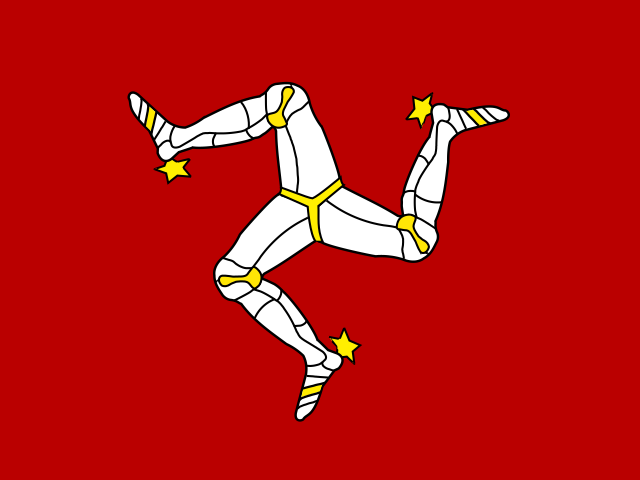 Isle of Man