Overview
Name
The name comes from Old Norse: its root "Guern(s)" has an unclear meaning and may refer to a person's name, Grani, or the color green; "-ey" means "island".
Source: CIA World Factbook · 2026-02-01 · text generated from this source, approved by a person
Background
The Channel Islands are the last remnants of the medieval Duchy of Normandy, which held sway in both France and England. During World War II, the islands were the only British soil that Germany occupied. The Bailiwick of Guernsey consists of the main island of Guernsey and a number of smaller islands, including Alderney, Sark, Herm, Jethou, Brecqhou, and Lihou.
The Bailiwick is a self-governing British Crown dependency, not part of the UK. The UK Government is constitutionally responsible for its defense and international representation.
Source: CIA World Factbook · 2026-02-01 · text generated from this source, approved by a person
Government
An unwritten constitution includes royal charters, statutes, and common law and practice. Government takes the form of a parliamentary democracy, the States of Deliberation. Its customary legal system is based on Norman customary law and includes elements of the French civil code and English common law. Guernsey has no independence and is a British Crown dependency. Liberation Day, 9 May (1945), is the national holiday.
Source: CIA World Factbook · 2026-02-01 · text generated from this source, approved by a person
Natural geography 1
Natural Earth outlines · features with a Wikidata ID
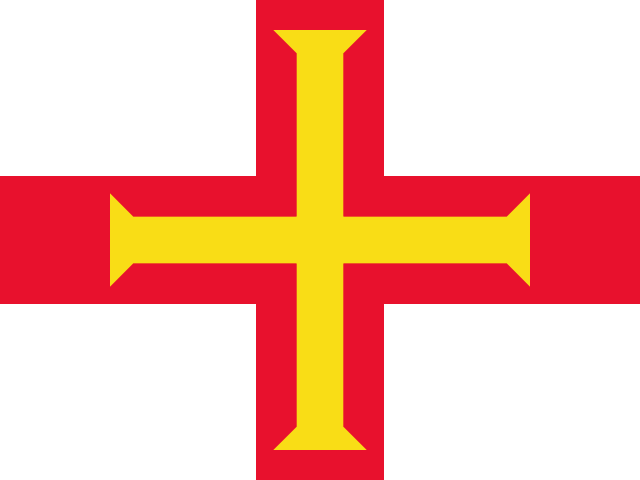 Guernsey