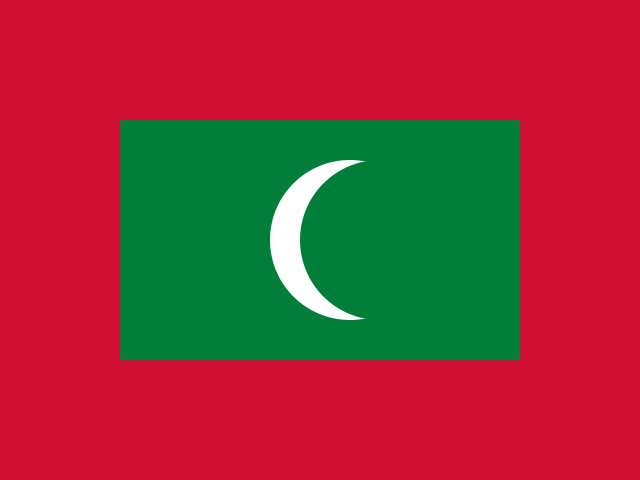
 Maldives
Background
A sultanate since the 12th century, the Maldives became a British protectorate in 1887 and a republic in 1968, after independence. President Maumoon Abdul Gayoom dominated Maldives' political scene. After political demonstrations in Male in 2003, Gayoom's government pledged liberalization and democratic reforms; parties were legalized in 2005. In 2008, a constituent assembly called the 'Special Majlis' finalized a new constitution ratified by Gayoom. Later that year, the first-ever presidential elections under a multi-candidate, multi-party system ended with Mohamed Nasheed defeating Gayoom in a runoff.
In 2012, after several weeks of street protests over a top judge's arrest, Nasheed resigned and handed power to Vice President Mohammed Waheed Hassan Maniku. A government-appointed Commission of National Inquiry found no evidence of a coup, but Nasheed contended that police and military personnel forced his resignation. After three rounds of voting in 2013, Abdulla Yameen Abdul Gayoom won the presidency; he lost reelection to Ibrahim Mohamed Solih in 2018 and was jailed on corruption charges in 2022. The winner of Maldives' fourth democratic election in September 2023, Male City Mayor Dr. Mohamed Muizzu campaigned on Maldivian sovereignty, vowing to remove Indian military personnel; he represents a PPM/PNC coalition.
Source: CIA World Factbook · 2026-02-01 · text generated from this source, approved by a person